Diet Guide For Losing Fat and Stay Fit
 Ignorance of what people eat is why there are so many over weight people today. The food industry hasn't helped, look at what's out there - fast food, junk food, processed food, it's no wonder so many people have a hard time with their weight.
The function of food is to supply energy and nutrients to the body, eating for taste is secondary. That doesn't mean you shouldn't enjoy the taste of what you eat, but an understanding of what you should eat will lead you to make better choices.
Ignorance of what people eat is why there are so many over weight people today. The food industry hasn't helped, look at what's out there - fast food, junk food, processed food, it's no wonder so many people have a hard time with their weight.
The function of food is to supply energy and nutrients to the body, eating for taste is secondary. That doesn't mean you shouldn't enjoy the taste of what you eat, but an understanding of what you should eat will lead you to make better choices.
FOOD CONSISTS OF THREE MACRO NUTRIENTS:
- Protein
- Carbohydrates
- Fats
Your body, after water, is mostly made of protein. You require protein every day, it performs literally thousands of functions in the body. It does this in the form of different combinations of amino acids, the "building blocks" of protein.
Carbohydrates are the preferred form of fuel for the body's energy needs. Simple or sugary carbs have there place but for the most part you should eat complex or slow burning carbs. An important point about carbs and where the average person makes there mistake is that after you supply your energy needs, any excess carbs will be stored as fat.
Think of this as similar to filling your car's gas tank - once the tank is full, if you keep pumping, you will have a lot of excess gas spilling out all over the place. Once your energy needs are met and you keep eating high carb meals, the excess "spills out" and you get fatter.
As for fat, there's good and bad types of fat, I will list what you should eat and what you should avoid later. Most of us eat way to much fat, primarily the bad types of fat, such as saturated fat and trans fat. Proper food choices/quantities can take care of this problem. So by reducing sugar, fat and total calorie consumption, we can control the food part of the equation, we'll cover the exercise part in a bit.
MACRONUTRIENTS
Set up your macro nutrient proportions as follows:
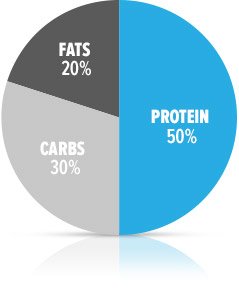
50% protein, 30-35% carbs and the remainder in healthy fats. Carb intake should be a little higher on weight training days to provide enough energy. On cardio days, you'll lose fat faster if you work out on an empty stomach (although a small protein shake isn't a bad idea).
Any one who reads my articles know I talk a lot about the post-workout shake, this is the best time for simple carbs. On non-cardio days, you can start your day with some simple carbs as part of a protein shake or high protein meal.
PROTEIN CHOICES
- Lean red meat
- Chicken (no skin)
- Turkey
- Fish
- Low-fat dairy—except for eggs
Don't be afraid to eat whole eggs as most of the nutrients are in the yolk. Avoid processed meats, high fat meat and full fat dairy.
CARB CHOICES
At this point, I'll make reference to the Glyceic Index, which is a measure of a food's ability to elevate blood sugar, and the Glycemic Load, which is the glycemic index of a food multiplied by it's carbohydrate content in grams, which tells you how much carbohydrate is in a food.
In both cases, the lower the number, the better the carb choice. Best carb choices that are low on the GI scale are:
Sweet potatoes
Yams
Beans
Corn
Brown rice
Oatmeal
Whole grain products
Veggies (these are fibrous carbs) and fruits such as strawberries
Bananas
Pears
Grapefruit
Apples
Cookies
Cakes
Pastries
Candy
White flour
High sugar foods
CARBS TO AVOID
FAT CHOICES
- Cold water fish
- Low fat cheeses
- Sunflower seeds
- Walnuts
- Almonds
- Peanut butter
- Olive oil
- Canola oil
- Safflower oil - eat these in moderation
- High-fat meats
- High-fat dairy
- High-fat salad dressings
- Deep-fried foods
- Butter


Comments
Post a Comment